
You hired a designer to make this room do work. It only does it for people already inside.
A proposal for Cedar & Sage Therapy — the marketing, the website you can walk into, and advertising you can finally measure.
A proposal for Cedar & Sage Therapy — the marketing, the website you can walk into, and advertising you can finally measure.
Someone decides they need help. That is already the hard part. Then they open a browser at eleven at night and try to work out whether your practice is somewhere they could sit down and say the thing they have not said out loud yet.
Everything they use to decide that is on a screen. And right now the screen is showing them stock photographs of people who do not work at Cedar & Sage, in rooms that are not yours.
Meanwhile you paid an interior designer to solve exactly this problem — to build a room that lowers someone's shoulders the moment they walk in. She did it beautifully, and it is the best marketing asset the practice owns. It just happens to be the one asset that currently only works on people who have already made the decision it was meant to help them make.
That is the whole proposal. Everything below is how you get that room in front of them first.
I read the site before writing a word of this. These are specific enough that you can check every one of them in about four minutes.
You own beautiful photography and the homepage shows stock. Three Unsplash images sit alongside your own brand shoot — the lounge, the rooms, the headshots. For a practice where the entire decision is can I trust this room and these people, a stranger from a stock library is worse than no picture at all.
I cannot find a Meta pixel or a Google Ads conversion tag in your pages. You have Tag Manager, so they may be firing through it — that is a question, not an accusation. But if they are not, every advertising decision you have made was made blind, and no one can tell you which dollar produced which appointment.
The logo Google associates with your organisation is a file called placeholder-logo. The logo itself is finished and good. The filename is what sits in your structured data. Tiny — and exactly the sort of thing that says nobody has been minding the estate.
There is a fourth I will not call a finding until it is measured: the contact page carries three forms and around ninety fields. That may be exactly right for intake. It may also be where people stop. Worth measuring before anyone changes it.
Not a gallery. The actual space, navigable — you arrive at the door, you look around, and every part of the room is the thing you would ask it about. The front desk books the appointment. The couch tells you who sits in it.
Every design decision your interior designer made — the light, the softness, the fact that nothing in here looks like a waiting room — was made to do something to a person standing in it. This is how that work reaches the person who has not come in yet.
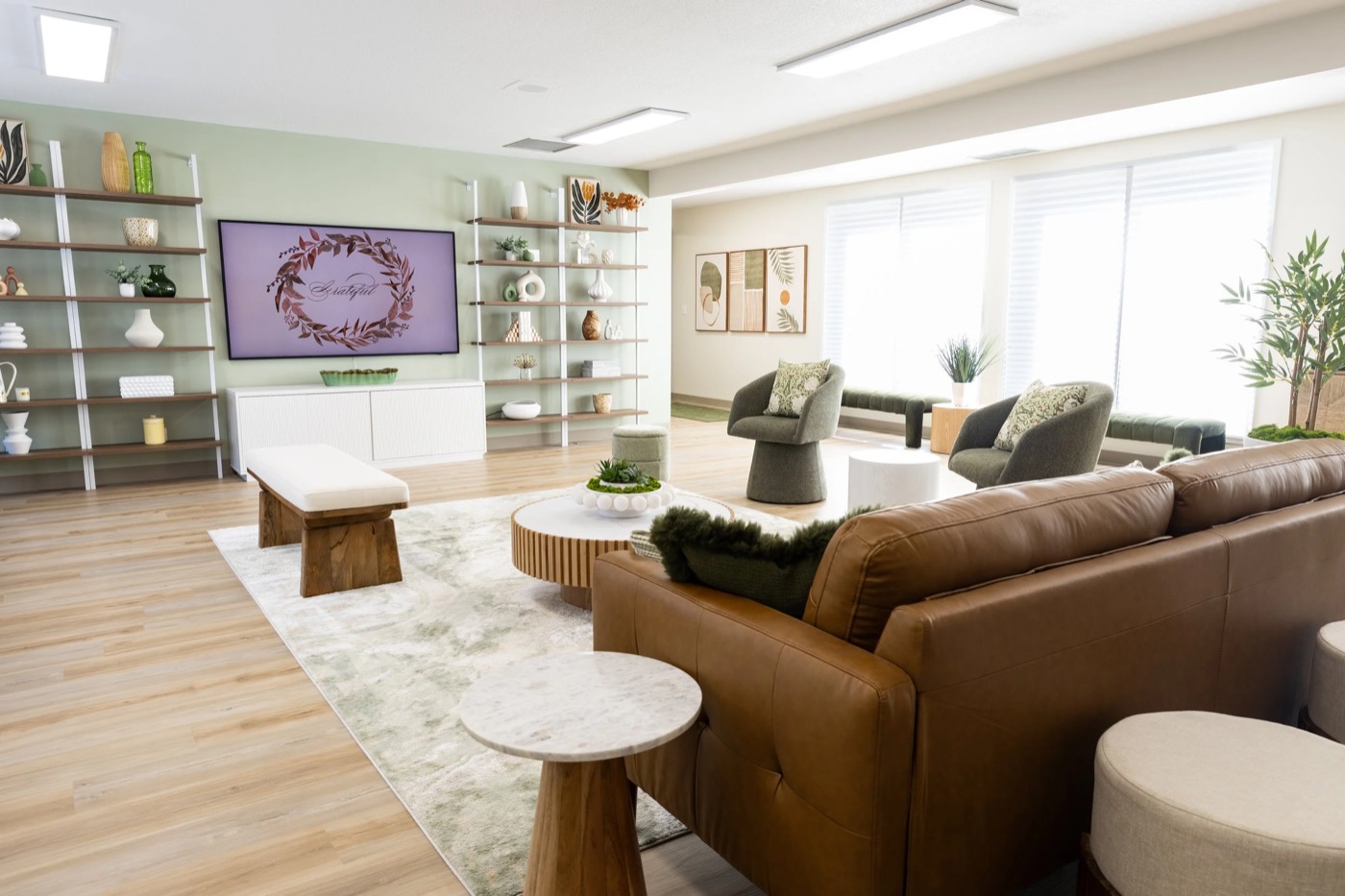
Touch a point. This is a sketch, built from one of your own photographs in an afternoon — four points on one room. The real thing is shot properly and in sequence, so a visitor moves from the door through reception to the room they would actually sit in, and books from wherever they are standing. It is the same footage that becomes the film.
The expensive part of any campaign is the day you point a camera at something. So we point it once, properly, and the same material becomes the tour, the film that runs before a feature at the local cinema, the social cut-downs, and the advertising creative.
That is not a saving trick. It is what makes the cinema idea affordable at all — a film shot only for the cinema has one life and one bill. This one has four.
Deliberately separable, so you can start with the one you believe in and add the rest when it has earned it.
The immersive tour as the front door, the practical site behind it, and an editor your team can use without calling anyone. Built to load fast on a phone at eleven at night, because that is when this decision gets made.
One production day in the practice. A short film built for a local screen, cut down for social, and the stills and sequences that make the tour work. Direction, camera, edit, sound and grade.
What is running, what it costs, what it is actually producing, and whether the measurement is honest. This comes first and it comes before anyone spends another dollar — you cannot improve a number nobody is collecting.
Campaign, calendar, creative and the ongoing advertising, with the practice's voice kept intact. Mental health carries rules most industries do not — what may be claimed, what may be shown, what a testimonial may say. That is a constraint to design inside, not to discover afterwards.
Every post, every ad, every campaign in one place — with a score against what actually performed for you, so the next one is chosen rather than guessed. Built on the same system I run for my own clients.
A monthly report tells you what happened. It almost never tells you what to do next. The difference is a score that means something — applied to every piece before it runs and after.
The numbers above are the shape of the thing, not your numbers. Yours do not exist yet — that is finding number two, and it is the first thing the audit fixes.
Two weeks. Your advertising, your measurement, your site. You get the findings in writing whether or not anything else follows — and if the answer is that your advertising is fine, I will tell you that.
One day in the practice, once we know what the campaign needs to say. Everything after this is made from it.
Built, tested on a real phone, handed over with the CMS and a walkthrough for whoever updates it.
Campaign, advertising, the dashboard. Reviewed monthly against the cost of a booked appointment — a number that will exist by then.
There are no prices on this page, and that is deliberate. I do not quote before I have read the brief properly — and I have read your site, not your business. Tell me which of the five you actually want and I will put real numbers against those, with what each one includes and what it does not.